
Miaomiao’s placement with Pwani University Kenya
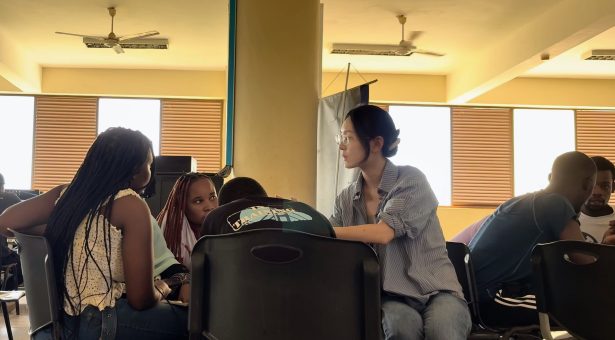
Miaomiao Gao, a third-year UEA student travelled to Kilifi County, Kenya to complete her PIPS with Pwani University, a public university, 60 km north of Mombassa.
Pwani University’s mission is to provide quality education, training, research and innovation for the advancement of the individual and society. It has a lively student body of approximately 10,000 students who bring energy, diversity and creativity to their community.
The aim of Miaomiao’s PIPS was to develop and deliver interactive, problem-based learning (PBL) and outreach activities that explore the role of microbes in human life, with a particular focus on issues relevant to local communities in Kenya such as food safety, gut health, and antibiotic resistance. With the specific aims of
- Designing two to three PBL modules integrating microbiology concepts with real-world problems (e.g., antibiotic resistance, probiotics, plant–microbe interactions);
- Planning and facilitating student workshops or outreach sessions that promote active learning and engagement;
- Gaining experience in educational design, science communication, and project coordination in an international context.
Miaomiao achieved her objectives and commented on the valuable skills of project management, leadership and coordination, teamwork, research management and stakeholder communication developed alongside her PIPS objectives. The experience gave her the opportunity to work in an international and cross-cultural environment, lead a programme independently and produce tangible outcomes – successful workshops, reusable teaching materials leading to good student engagement.
She particularly enjoyed the student interaction and their ongoing discussions and curiosity which alongside contributing to an educational programme throughout its full development has her considering an education-related position post PhD.
Miaomiao’s advice to other students about to start organising their PIPS is
- If going overseas, immigration and local administrative procedures may take longer than expected, so seek advice early and allow substantial preparation time.
- Start host discussions in the first or second year of your PhD as it will make it easier to manage the timing, approvals and the transition back to research.
- Discuss a realistic project scope with your host at the beginning of the placement and maintain flexible and proactive communication during it.
- With placements involving teaching or public engagement, it is useful to understand the local academic calendar and practical delivery arrangements at an early stage.