
Joshua completes science communication PIPS with the Royal Institution
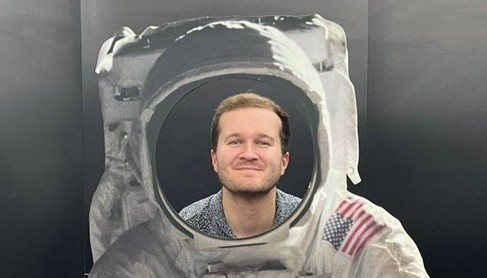
Joshua Horton, a Quadram Institute student reflects on his internship at science communication charity, the Royal Institution, and exploring different career options outside of academic research.
“As I entered the third year of my PhD, I was feeling comfortable in the academic and laboratory research environments and had made good progress with my project; investigating previously uncharacterised genes and their involvement in the regulation of biofilm formation, a process where bacteria settle onto a surface and encase themselves in a protective structure. With my PIPS (Professional Internship for PhD Students) on the horizon, I had the chance to break out of my comfort zone, gain new skills and experience a completely different environment.
The latest Public Attitudes to Science survey reveals something that has been suspected for a while: young people between ages 16 and 24 are ditching traditional newspapers and TV in favour of social media platforms like TikTok and Instagram. If we want to share the wonders of science with them, we have to go to where they are. That’s what drew me to the Digital Media Internship at the Royal Institution (Ri). I wanted to learn how a world-class institution translates complex research into the digital content that reaches younger audiences.
The Royal Institution: steeped in history and science communication
The Ri is a leading independent charity dedicated to bringing the public and scientists together to share their interest in science. Founded in 1799, the Ri’s iconic Mayfair building in London has been a place where major breakthroughs were made and first shared with the public, including the isolation or discovery of ten elements, benzene, and electromagnetic induction. It’s even where photography was first announced to the world!
But the Ri isn’t just a museum of the past. It remains a vibrant hub for modern science communication.
The Ri is perhaps most famous for the CHRISTMAS LECTURES®, a series for young people that has been broadcast on TV since 1936, which celebrated its 200th Anniversary during my internship. The Ri has also expanded into the digital age, boasting over 1.7 million YouTube subscribers and a massive social media following – ensuring that those that aren’t able to visit their London building are still able to learn about the fascinating world of science.
Behind the content: working with the Digital and Marketing Team
From day one of my internship, I was fully embedded in the Digital and Marketing team. I got stuck into various high-impact projects that helped me gain a wide variety of skills including:
Short-form video
I helped produce content for Instagram Reels and TikTok, learning how to summarise complex scientific topics into 1 minute 30 second engaging videos. This included taking short clips from recent talks presented at the Ri theatre, but also original content. I learnt the best practice of engaging the viewer through the inclusion of a ‘hook’ (such as a question or bold statement) within the first few seconds of the video. Many of the videos we produced had a short story explaining the history of a certain scientific topic, leaving the viewer with a further understanding of something that they may never have come across before. I also had the chance to learn the various software that digital teams use to edit such content (such as Adobe Premiere Pro and Photoshop), which will be extremely useful in the future.
The 200th Anniversary of the Christmas Lectures
In the lead-up to this important milestone, the team and I travelled to the National Space Centre and Space Park Leicester to collaborate and produce promotional content that encourages viewers to watch the special anniversary series. We interviewed Prof Suzie Imber for a podcast about the Bepi Colombo spacecraft that will be used to study ‘space weather’ on Mercury, as well produce a short video about her work. I presented (and edited) videos at the National Space Centre museum along the theme of space science, even including a video that I researched, wrote, presented, and edited, all about microbiology on the International Space Station!
Alongside working on these video projects, I had the chance to produce my own podcast episode, picking out the most interesting stories from the year. I also wrote blogs focussing again on space science, including a shorter list style blog ‘8 things originally developed for space travel’ and a long-form review article on space microbiology, coming up with the title ‘Houston, We Have a Microbe: What Happens When Bacteria Leave Earth?’
A large learning curve in science communication
I left the internship experience with a brand-new digital toolkit for a career in the digital science communication industry, including proficiency in video editing software, social media management platforms, and data analytics.
I also significantly improved my science communication skills, extending my experience in science communication beyond microbiology. For the Christmas Lectures, I translated space science into engaging content for a general audience. It was a fun, yet difficult challenge.
Working in a smaller charitable organisation also gave me a unique chance to chat with everyone from the Director to the Christmas Lectures TV production crews, building a professional network of people in the digital science communication industry.
Looking to future career options
My internship with the Ri digital team was an eye-opening experience that has reinforced my love for science communication and has given me many valuable skills for the digital world.
I’m now seriously considering science communication as a future career path, but perhaps alongside my academic research career. Regardless of what my future holds, the internship was a brilliant reminder that while the lab is where the science happens, it’s the communication that makes the science matter.”